How Best Hair Transplant Works with Scalp Physiology Basics?
Hair loss is a common concern for many people, especially in fast-paced urban environments where stress, lifestyle, and genetics often play a combined role. Understanding how a hair transplant works becomes much easier when you first grasp the basics of scalp physiology. This connection is especially important for those considering the best hair transplant in dubai, where advanced techniques and modern approaches to hair restoration are widely sought after.In this article, we’ll break down how the scalp functions, how hair transplants interact with natural biology, and what makes the procedure effective and long-lasting.
Understanding Scalp Physiology: The Foundation of Hair Growth
To understand hair transplantation, it’s important to first understand how the scalp supports hair growth.The human scalp is made up of multiple layers:
- Epidermis: The outer protective layer that shields the scalp from environmental damage
- Dermis: Contains hair follicles, blood vessels, and sebaceous (oil) glands
- Subcutaneous layer: A deeper layer made of fat and connective tissue that supports follicle health
Hair grows from structures called hair follicles, which are embedded in the dermis. Each follicle goes through a natural cycle:
- Anagen (growth phase): Active hair growth occurs
- Catagen (transition phase): Growth slows and follicle shrinks
- Telogen (resting phase): Hair falls out and is replaced
When someone experiences hair loss, it is often due to weakened follicles, hormonal changes, or reduced blood supply to these structures.
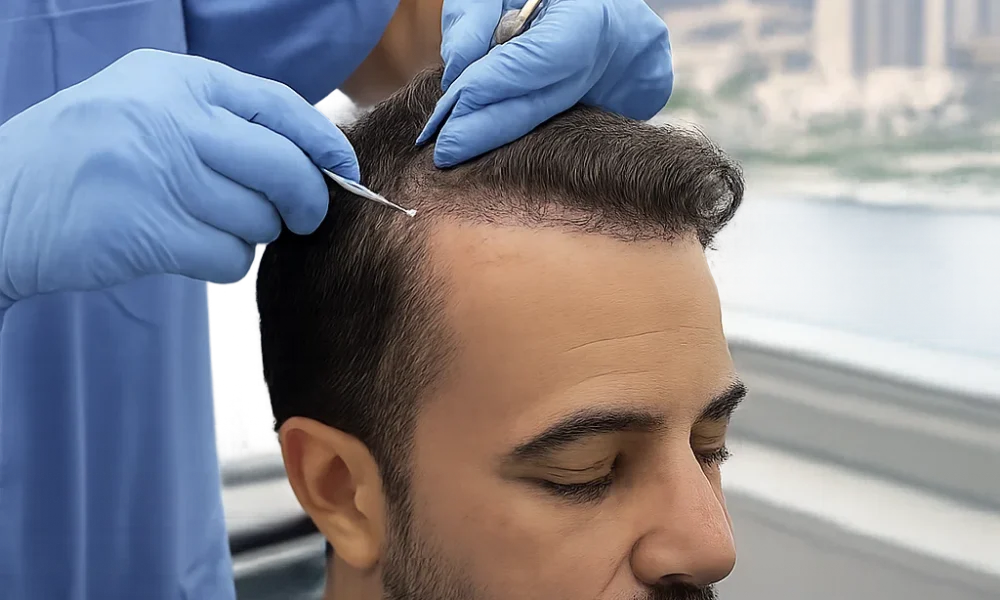
How Hair Transplant Works with Natural Scalp Biology
Modern hair transplantation is not about creating new hair; it’s about redistributing healthy follicles from one part of the scalp to another.The process typically involves extracting healthy hair follicles from a donor area (usually the back or sides of the scalp) and implanting them into thinning or bald areas.These donor follicles are genetically resistant to hair loss, which is why they continue to grow even after being moved.This is where scalp physiology becomes essential:
- The transplanted follicles rely on new blood supply formation in the recipient area
- The scalp’s healing response helps “anchor” the grafts into place
- Proper integration ensures long-term growth and natural appearance
This biological compatibility is what makes procedures like the best hair transplant in Dubai highly successful when performed with precision.
The Role of Blood Supply in Hair Transplant Success
One of the most important aspects of scalp physiology is vascularization, or blood flow.Each hair follicle depends on tiny blood vessels that deliver oxygen and nutrients. During a hair transplant:
- Small channels are created in the scalp
- Grafts are carefully placed into these channels
- The body gradually forms new blood connections around the transplanted follicles
Without proper blood supply, follicles cannot survive or grow. This is why technique and scalp health are critical for natural-looking results.
Why Scalp Elasticity and Thickness Matter
Not all scalps are the same. Factors such as elasticity, thickness, and skin condition influence how well a transplant works.A healthy scalp typically:
- Heals faster after implantation
- Holds grafts more securely
- Supports better long-term hair density
Scalp tightness or poor elasticity can make the procedure more complex, which is why careful evaluation is always needed before deciding on the best hair transplant in Dubai approach for each individual.
Types of Hair Transplant Techniques and Their Biological Approach
Hair transplantation methods are designed to work in harmony with scalp physiology.
1. Follicular Unit Extraction (FUE)
- Individual follicles are extracted and implanted
- Minimal scarring and faster recovery
- Works well with flexible scalp tissue
2. Follicular Unit Transplantation (FUT)
- A strip of scalp is removed and dissected into grafts
- Suitable for larger coverage areas
- Relies heavily on proper healing of donor area
Both methods depend on how well the scalp accepts and nourishes transplanted follicles.
Why Dubai Is a Popular Destination for Hair Transplant Solutions
Dubai has become a global hub for advanced aesthetic treatments, including hair restoration procedures. People often search for the best hair transplant in Dubai due to the city’s reputation for modern technology and skilled cosmetic expertise.Several factors contribute to this popularity:
- Use of advanced follicle extraction techniques
- High focus on natural-looking hairlines
- Strong emphasis on scalp health and post-procedure care
- Access to globally trained specialists and modern facilities
While techniques are important, the real success lies in understanding scalp biology and applying it correctly during the procedure.
What to Expect During the Healing Process
After a hair transplant, the scalp goes through a natural healing cycle that mirrors its biological functions.Common stages include:
- Initial healing (1–7 days): Mild redness and scabbing
- Shedding phase (2–4 weeks): Transplanted hairs may fall out temporarily
- Regrowth phase (3–6 months): New hair begins to emerge
- Full results (9–12 months): Hair becomes thicker and more natural
This process is completely normal and reflects the scalp’s natural regeneration system at work.
Supporting Scalp Health for Better Results
To maximize results from the best hair transplant in Dubai, maintaining scalp health is essential. Simple habits can make a significant difference:
- Keeping the scalp clean and hydrated
- Avoiding harsh chemical treatments during recovery
- Protecting the scalp from excessive sun exposure
- Following proper post-care instructions consistently
A healthy scalp environment allows transplanted follicles to integrate more effectively and grow stronger over time.
Final Thoughts
Understanding scalp physiology helps demystify how hair transplantation actually works. It is not just a cosmetic procedure—it is a biological process that depends on blood supply, follicle behavior, and skin health.When these factors are carefully considered and combined with modern techniques, the results can be highly natural and long-lasting. That’s why many individuals seeking reliable solutions often explore options for the best hair transplant in Dubai, where science and aesthetics come together to restore both hair and confidence.